
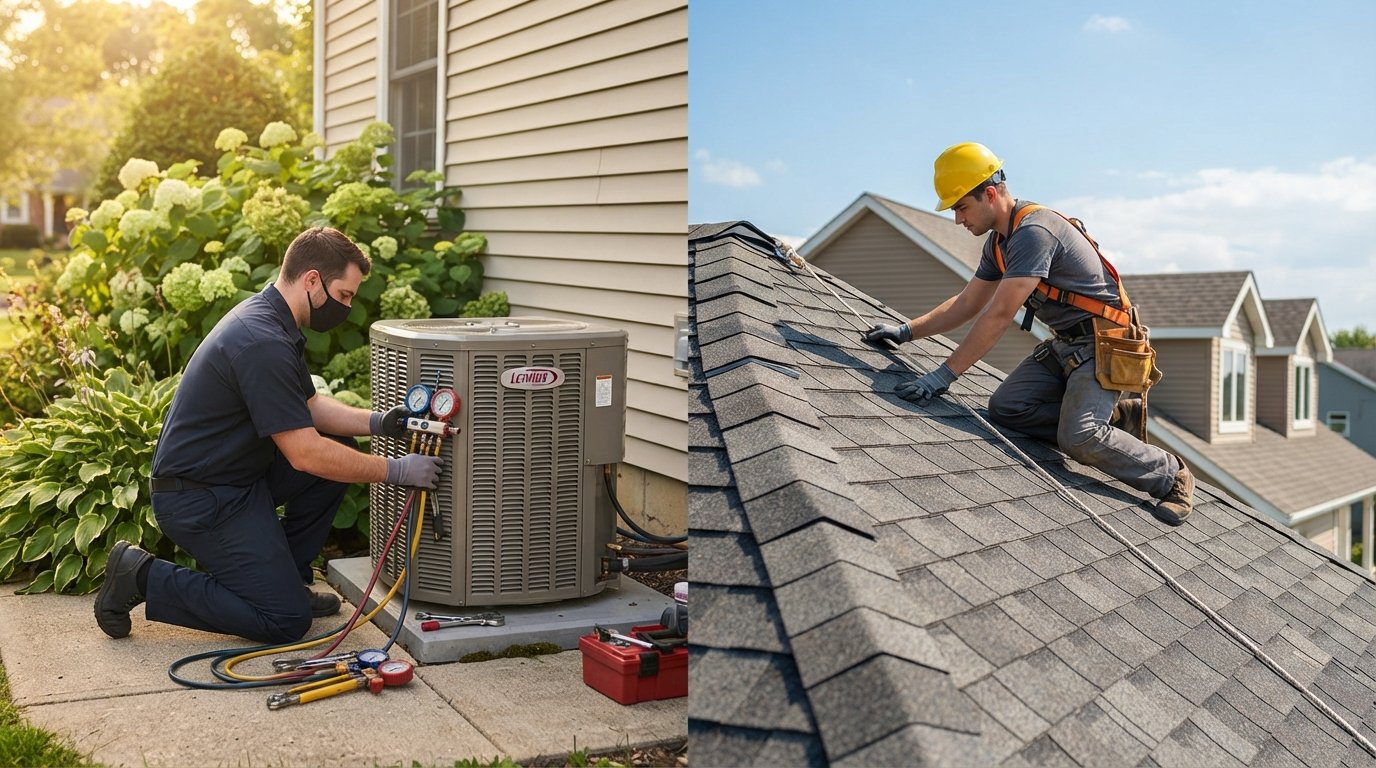
HVAC and Roofing Seasonality in Home Improvement Lead Campaigns
Master hvac and roofing seasonality in home improvement lead campaigns to optimize budgets and call filtering. Call (510)-663-7016 for expert guidance.

Imagine allocating your entire home improvement marketing budget in April, only to watch HVAC leads dry up in July while roofing inquiries surge after a hailstorm. This scenario plays out every year for advertisers who treat all home improvement verticals as a single, year-round demand pool. The truth is that HVAC and roofing follow distinctly different seasonal rhythms, and those rhythms directly dictate when your phone rings, how long prospects stay on the line, and which campaigns deserve your next dollar. Understanding hvac and roofing seasonality in home improvement lead campaigns is not an academic exercise; it is the difference between a predictable cost per acquisition and a budget that swings wildly with the weather. For performance marketers, publishers, and network owners, mastering these demand curves unlocks smarter call filtering, better budget rotation, and more accurate forecasting. This article breaks down the seasonal patterns, operational adjustments, and data strategies that turn seasonality from a threat into a competitive advantage.
Why HVAC and Roofing Demand Curves Diverge
HVAC demand is driven primarily by temperature extremes. In most of the United States, air conditioning repair and installation peak from late May through early September, with a secondary spike in heating system replacements from November through February. Roofing demand tells a different story. While roofing installation and repair happen year-round, insurance-driven replacements surge after spring and summer storm seasons, particularly in hail-prone regions like Texas, Colorado, and the Midwest. Winter months bring a slowdown in new roof installations but an increase in emergency repairs from ice dams and wind damage.
These divergent drivers mean that a lead campaign optimized for HVAC in January will likely underperform if applied unchanged to roofing. HVAC prospects in winter are often motivated by furnace failure, an urgent, must-fix-now event. Roofing prospects in winter may be planning a spring replacement or dealing with a leak, but the urgency and decision timeline differ. Advertisers who recognize these nuances can tailor creative messaging, call routing rules, and bid strategies to match the emotional and practical state of the prospect at each point in the year.
Publishers and network owners also benefit from understanding these curves. If you operate a home services website or a pay-per-call network, you can rotate offers by season to maintain high conversion rates. Promoting HVAC offers in July and roofing offers in October, rather than pushing both equally year-round, aligns your traffic with the natural urgency of the consumer. This rotation increases the likelihood that a click or call turns into a qualified lead, which in turn improves your payout and advertiser satisfaction. For a deeper dive into intent signals and 2026 strategies, see our guide on high-intent home improvement leads.
Mapping the Seasonal Calendar for HVAC and Roofing
To plan effectively, break the year into four seasonal blocks and adjust expectations for each trade. The following calendar is a general framework; local climate and storm patterns will shift the exact timing, but the pattern holds across most markets.
- Spring (March to May): HVAC demand begins to rise as homeowners schedule AC tune-ups before summer heat. Roofing inquiries spike after spring storms, especially in hail belts. This is a prime time to increase budgets for both trades, but with different creative angles: HVAC focuses on preventive maintenance, roofing on storm damage inspections.
- Summer (June to August): HVAC demand peaks, driven by emergency AC repairs and replacements. Roofing demand remains strong in storm-affected areas but may soften in regions without significant weather events. Advertisers should shift the majority of home improvement budget toward HVAC, while keeping a smaller roofing presence for emergency repairs and insurance claims.
- Fall (September to November): HVAC demand transitions from cooling to heating, with a brief lull in October before furnace season begins. Roofing demand often peaks in October and November as homeowners rush to complete replacements before winter. This is the ideal window to rotate budget toward roofing while maintaining HVAC presence for heating system checks.
- Winter (December to February): HVAC heating emergencies dominate, particularly in cold climates. Roofing demand slows for installations but rises for emergency repairs like ice dams and storm damage. Advertisers should prioritize HVAC with urgent messaging and maintain a lean roofing campaign focused on repair and insurance claims.
This calendar is not just about when to spend more; it is also about when to pull back. Running a full-scale roofing installation campaign in January in Minnesota is likely to waste budget on prospects who are months away from a decision. Conversely, underinvesting in HVAC during a July heatwave means leaving high-intent callers to your competitors. The key is to adjust budgets and targeting in line with these seasonal shifts rather than maintaining a flat spend year-round.
Adjusting Call Filtering and Hours by Season
Call filtering is one of the most powerful tools for managing seasonality because it allows advertisers to control which calls they pay for based on criteria like duration, geography, and time of day. During peak HVAC season, for example, you may want to accept calls from a wider geographic radius because demand is high and your technicians can travel farther. In the off-season, you might tighten the radius to avoid paying for calls from areas you cannot service economically.
Operating hours should also flex with the season. HVAC emergency calls often come after hours and on weekends, especially during heatwaves or cold snaps. If your call center is not staffed to handle these calls, you are paying for leads that go unanswered, which is a waste of budget. Adjusting your IVR and routing rules to cover extended hours during peak season can capture more qualified leads. Roofing, by contrast, may see more calls during business hours as homeowners schedule inspections, but storm events can drive after-hours inquiries. Setting up seasonal rules in your call filtering platform ensures you pay only for calls that fit your capacity and service area.
Seasonal call filtering also helps with lead quality. During peak season, you may see an increase in price shoppers or unqualified callers. Tightening duration requirements or adding qualifying questions to your IVR can filter out low-intent calls. In the off-season, you might loosen these filters slightly to capture more opportunities, as overall volume is lower. The goal is to maintain a consistent cost per qualified lead even as raw call volume fluctuates. For advertisers using a platform like LeadGenerationPlatform, these seasonal adjustments can be implemented quickly through call filtering and call quality pricing features, allowing you to adapt without rebuilding campaigns from scratch.
Shifting Budget Between Trades as Demand Rotates
One of the most effective strategies for managing hvac and roofing seasonality in home improvement lead campaigns is to treat your budget as a portfolio that rotates between trades. Instead of allocating a fixed monthly budget to each vertical, maintain a flexible pool that can be shifted based on seasonal demand signals. This approach requires discipline and data, but it consistently outperforms static budgeting.
Start by defining the seasonal windows for each trade in your market. If you operate nationally, you may need regional budgets because roofing season in Florida differs from roofing season in Ohio. Use historical performance data to identify the weeks when each trade historically produces the lowest cost per lead and the highest conversion rates. Then, set budget caps and floors for each trade, and allow the remainder to flow to whichever trade is in peak season. For example, you might set a baseline HVAC budget for winter heating emergencies and a baseline roofing budget for emergency repairs, then shift the majority of discretionary spend to HVAC in summer and roofing in fall.
This rotation not only improves efficiency but also helps you maintain relationships with publishers and networks. If you suddenly pause a roofing campaign in its off-season, publishers may reallocate your offers to competitors. By maintaining a lean but steady presence year-round, you keep your offers visible and your publisher relationships intact. When peak season returns, you can ramp up quickly without renegotiating terms. For network owners, offering advertisers the ability to adjust budgets seasonally is a value-add that can strengthen partnerships and increase retention.
Forecasting Lead Volume from Prior-Season Performance Data
Accurate forecasting is the backbone of seasonal campaign planning. Without it, you are guessing how much budget to allocate and when to ramp up or pull back. The good news is that HVAC and roofing demand, while influenced by weather, follows predictable patterns that can be modeled from historical data. By analyzing prior-season performance, you can build a forecast that accounts for both the seasonal curve and year-over-year growth or decline.
Start by pulling at least two years of data for each trade, broken down by week or month. Look at metrics like lead volume, cost per lead, call duration, conversion rate, and close rate. Plot these metrics over time to identify the seasonal peaks and troughs. Then, calculate the average seasonal index for each period. For example, if July HVAC lead volume is consistently 150% of the annual average, you can use that index to forecast next July's volume based on your expected annual total. Adjust for any known changes in market conditions, such as a new competitor or a regulatory shift, and for weather forecasts if you have access to reliable seasonal outlooks.
Forecasting also helps with capacity planning. If you know that roofing lead volume will triple in October, you can staff your call center accordingly and set call filtering rules to handle the increased volume without sacrificing quality. Similarly, you can negotiate with publishers for additional traffic during peak periods, securing better rates by committing early. For advertisers using Ping & Post or Pay Per Call, having a forecast allows you to set realistic bid caps and avoid overpaying during competitive peaks.
Finally, use your forecast to set expectations with stakeholders. If you are an advertiser reporting to a CMO, showing a seasonal forecast demonstrates that you understand the business and are planning proactively rather than reacting to dips. If you are a publisher, a forecast helps you explain fluctuations in revenue and justify investments in traffic acquisition ahead of peak season.
Operational Tactics for Seasonal Campaign Management
Beyond budgeting and forecasting, several operational tactics can help you manage seasonality more effectively. First, maintain a creative library that includes seasonal messaging for each trade. HVAC creative in summer should emphasize cooling emergencies and quick repair, while winter creative should focus on heating reliability and safety. Roofing creative in spring and fall can highlight storm damage inspections and insurance claim assistance. Having these assets ready allows you to rotate creative quickly as seasons change.
Second, use dynamic number assignment and call tracking to monitor performance by season and by channel. This data feeds back into your forecast and helps you identify which publishers or keywords are delivering the best results in each season. You can then adjust your traffic mix accordingly, doubling down on what works and cutting what does not. Third, consider seasonal pricing adjustments. If your call center is busier in peak season, you may need to pay more per lead to secure top placement. Conversely, in the off-season, you can negotiate lower rates or focus on exclusive offers that give you a competitive edge.
Fourth, build seasonal contingency plans for weather events. A major hail storm can spike roofing demand overnight, and a heatwave can do the same for HVAC. Having a plan in place, including pre-approved budget increases, standby creative, and call center surge capacity, allows you to capture demand when it matters most. These events are often the most profitable periods of the year, but only if you are prepared to handle the volume.
Aligning Publishers and Networks with Seasonal Demand
Publishers and network owners play a critical role in seasonal success. If you are a publisher, you can maximize revenue by rotating offers to match seasonal demand. Keep a mix of HVAC and roofing offers in your portfolio, and adjust the prominence of each based on the season. For example, feature HVAC offers prominently on your homepage in July and roofing offers in October. Use call tracking data to identify which offers convert best in each season and allocate your traffic accordingly.
Network owners can add value by providing advertisers with seasonal insights and flexible terms. Offering the ability to pause or adjust campaigns without penalties encourages advertisers to stay on your network year-round. You can also create seasonal packages that bundle HVAC and roofing offers, giving advertisers a one-stop solution for their home improvement lead needs. This approach positions your network as a strategic partner rather than just a traffic source. For platforms like LeadGenerationPlatform, which serves both advertisers and publishers, seasonal flexibility is built into the system through features like call filtering, ROI tracking, and creative support. Advertisers can adjust their campaigns in real time, and publishers can access exclusive offers that align with seasonal demand.
In conclusion, hvac and roofing seasonality in home improvement lead campaigns is a manageable challenge when approached with data, planning, and the right tools. By understanding the distinct demand curves, adjusting call filtering and hours, rotating budgets between trades, and forecasting from historical data, advertisers and publishers can turn seasonal swings into predictable, profitable performance. The key is to plan ahead, stay flexible, and use platforms that support seasonal adjustments without friction. LeadGenerationPlatform